How to Slow Down in a Busy World: A Gentle Guide to Slow Living
There are days when I close Instagram feeling as though I’m somehow falling behind. Rationally, I know that social media rarely reflects everyday life. Most people share their happiest moments, their most beautiful corners of home, their greatest achievements, and the memories they want to remember. Yet even knowing this doesn’t always protect me from comparison.
Without realizing it, I begin measuring my ordinary Tuesday afternoon against someone else’s carefully curated highlights. Suddenly, my home doesn’t seem quite beautiful enough. My work doesn’t feel successful enough. I haven’t baked enough sourdough, read enough books to my daughter, exercised enough, travelled enough, or accomplished enough. My own life, which felt perfectly ordinary just an hour earlier, begins to feel somehow incomplete.
But something interesting happens when I spend a few days away from that constant stream of comparison.
The pressure slowly fades. I begin noticing the sunlight coming through the kitchen window while I make my morning coffee. I enjoy hanging laundry outside on a warm afternoon. I hear birdsong during a walk instead of another podcast. The evening stretches a little longer, conversations feel less hurried, and simple routines become satisfying again.
Nothing about my life has changed.
Only my attention has.
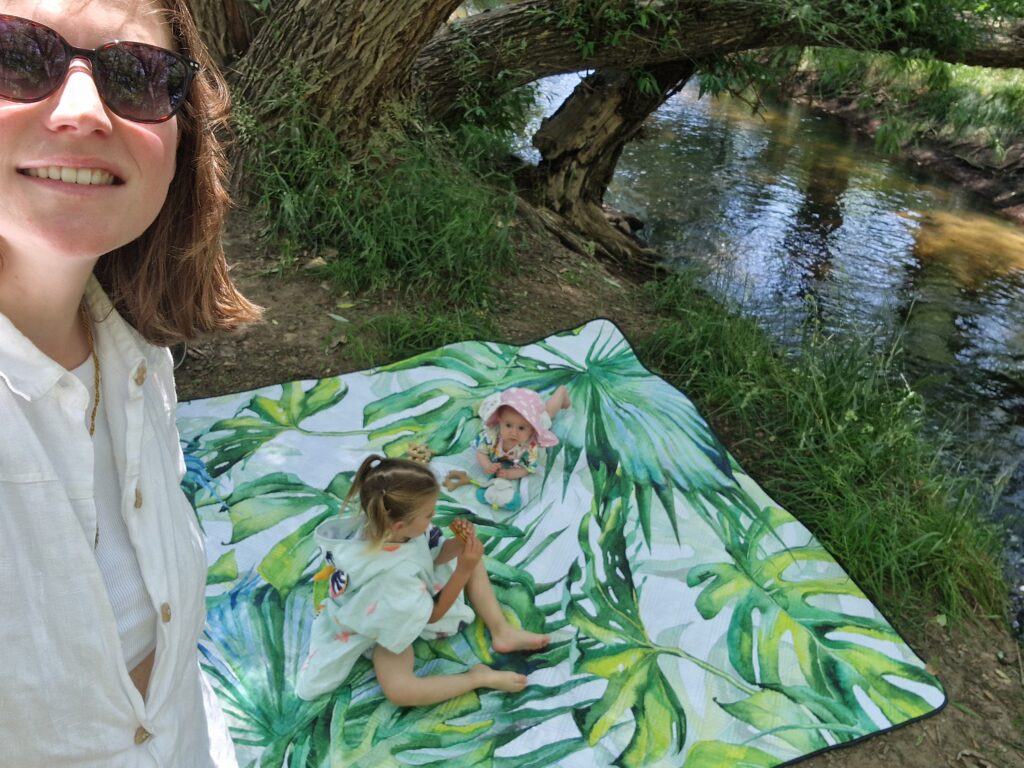
Over time, I’ve come to believe that slowing down isn’t simply about moving more slowly. It’s about becoming more present in your own life than in everyone else’s. It’s about reclaiming your attention from a world that constantly competes for it and gently turning it back toward what is already in front of you.
Perhaps that’s what slow living really means.
Not escaping modern life.
Not moving to a cottage in the countryside.
Not growing all your own vegetables or giving up technology forever.
Instead, it’s choosing to live more intentionally, wherever you are and whatever season of life you’re in.
If you’ve been feeling overwhelmed, constantly busy, or quietly exhausted by the pressure to keep up, I hope this article feels less like another list of things you should do and more like an invitation.
An invitation to breathe a little deeper.
To notice a little more.
To trust that an ordinary life, lived with attention, can be an extraordinary one.
What Does Slow Living Really Mean?
Over the last few years, slow living has become one of those phrases that seems to appear everywhere. Scroll through Pinterest or Instagram, and you’ll likely find images of linen dresses drying in the breeze, rustic kitchens filled with homemade bread, wildflower bouquets on wooden tables, and cosy countryside cottages bathed in golden evening light.
It’s beautiful imagery—but it has also created a misunderstanding.
Slow living isn’t an aesthetic.
You don’t need a farmhouse, a vegetable garden, handcrafted ceramics, or a perfectly curated wardrobe to embrace it. Those things may bring joy to some people, but they aren’t what defines a slower life.
At its heart, slow living is a philosophy. It’s the practice of making conscious choices instead of living on autopilot. It means paying attention to what genuinely nourishes you rather than constantly reacting to what the world demands from you.
It asks simple but surprisingly powerful questions.
Do I actually enjoy living this way?
Am I making this choice because it reflects my values—or because everyone else seems to be doing it?
What would my life look like if I stopped trying to keep up?
Contrary to what the name suggests, slow living isn’t about doing everything slowly. There are seasons when life naturally becomes full: welcoming a new baby, caring for loved ones, building a business, moving house, or navigating unexpected challenges. A slower life doesn’t require us to avoid those seasons.
Instead, it invites us to move through them with intention rather than constant urgency.
Ultimately, slow living isn’t measured by the pace of your calendar.
It’s measured by the quality of your attention.
Why So Many Women Feel Constantly Busy
Many women wake up already carrying the weight of the day ahead.
Before breakfast is even on the table, we’ve checked our phones, answered messages, mentally planned dinner, remembered a doctor’s appointment, added something to the shopping list, and wondered whether we’re forgetting something important. Our bodies may still be at home, but our minds are already racing ahead.
Modern culture quietly rewards this way of living.
Being busy is often seen as a sign of ambition. Productivity is celebrated, while rest can easily feel like laziness. Even moments of stillness become opportunities to listen to another podcast, reply to another email, or tick something else off the list.
For many women, especially mothers, there’s also the invisible mental load—the endless planning, remembering, anticipating, organising, and caring that often goes unnoticed because it happens almost entirely inside our minds.
And then there is the digital world.
Every day, we consume hundreds of images and ideas about how we could improve ourselves. Better parenting. Better routines. Better homes. Better careers. Better bodies. Better meals. Better wardrobes.
None of these messages are harmful on their own. But together, they create a subtle feeling that we are always one step away from finally becoming the woman we’re supposed to be.
Perhaps that is why so many of us feel exhausted.
Not because we are incapable of doing enough, but because we’ve forgotten what “enough” even feels like.
One of the quietest gifts of slow living is that it gently returns that feeling to us.
The Benefits of Slow Living
At first, slowing down can feel almost counterintuitive.
We live in a culture that quietly admires speed. We celebrate people who seem endlessly productive, who manage demanding careers, maintain beautiful homes, raise happy children, exercise regularly, cook nourishing meals, and somehow still find time to become better versions of themselves.
Without even realizing it, we begin to believe that peace is something we earn after we’ve done enough.
After we’ve answered every email.
Finished every task.
Folded every basket of laundry.
Reached every goal.
But that moment rarely comes.
The list simply grows longer.
Perhaps this is why so many of us carry a quiet sense of restlessness, even on days when nothing is technically wrong. We become so focused on reaching the next milestone that we gradually stop inhabiting the life unfolding between them.
Slow living gently interrupts this pattern.
It doesn’t ask us to abandon ambition or stop caring about meaningful work. It simply asks a different question.
Instead of wondering, “What else can I accomplish today?” we begin asking, “Am I fully here for the life I’m already living?”
The answer isn’t always comfortable.
Sometimes we realise we’ve hurried through breakfast without tasting it. That we answered our child’s question while thinking about dinner. That we watched the sunset through the lens of a phone camera instead of with our own eyes.
Life hasn’t disappeared.
Our attention has.
There is growing evidence that simple practices—spending time in nature, cultivating meaningful relationships, reducing chronic stress, and allowing moments of mindfulness throughout the day—can support emotional well-being and overall health. While slow living isn’t a cure for anxiety or a substitute for professional support, many women find that it creates more room to breathe in lives that often feel overwhelmingly full.
Perhaps the greatest gift of slowing down isn’t that life becomes easier.
Life will still surprise us.
Children will still wake during the night.
Plans will still change.
Laundry will still wait to be folded.
But somewhere in the middle of ordinary days, we begin noticing that happiness was never hiding in a future version of our lives.
It was quietly waiting inside this one.
In the warmth of a mug held between your hands on a cool morning.
In the smell of rosemary carried on the evening breeze.
In your daughter reaching for your hand without saying a word.
In the familiar sound of the front door opening as someone you love comes home.
These moments ask for almost nothing from us.
Only that we are present enough to notice them.
You Don’t Need to Change Your Whole Life
One of the reasons so many people admire the idea of slow living is also the reason they believe it isn’t meant for them.
They imagine that somewhere, someone else is already living that life.
Perhaps she lives in an old stone house in the countryside. She bakes sourdough every weekend, grows vegetables in her garden, wears linen year-round, and somehow never seems to rush.
It’s a beautiful image.
But it’s also a dangerous one.
Because it quietly suggests that slow living begins somewhere else.
After the move.
After the renovation.
After the children are older.
After work becomes less demanding.
After life finally calms down.
The truth is far simpler.
Slow living almost never begins with changing your circumstances.
It begins by changing your relationship with the circumstances you already have.
Perhaps tomorrow morning you open the window before reaching for your phone.
Perhaps you eat lunch sitting down instead of standing at the kitchen counter.
Perhaps you take the longer route home simply because the trees are in bloom.
Perhaps you decide that not every weekend needs to be filled with plans.
None of these choices will transform your life overnight.
In fact, they may seem almost too small to matter.
But a meaningful life is rarely built through dramatic moments.
It is shaped by the quiet rituals we repeat without anyone else noticing.
A slower life isn’t created all at once.
It is woven, almost invisibly, into ordinary days.
One thoughtful decision at a time.
Say Yes to Fewer Commitments
One of the quietest forms of self-care is learning that not every invitation deserves a “yes.”
For many women, this is surprisingly difficult.
We don’t want to disappoint anyone. We want to be helpful, reliable, present. We say yes to one more project, one more social event, one more favour, one more responsibility because we believe that’s what a good friend, mother, colleague, or daughter should do.
Little by little, our calendars become full.
Yet our hearts begin to feel strangely empty.
There is a difference between living a full life and living an overcrowded one.
A full life leaves room for conversation after dinner, an unplanned walk, an afternoon spent reading while rain taps gently against the window.
An overcrowded life leaves only enough room to prepare for the next thing.
Perhaps slowing down doesn’t always require adding something beautiful.
Sometimes it begins by gently letting something go.
Practice Single-Tasking
We have become remarkably good at doing several things at once.
We answer emails while eating lunch. We listen to podcasts while folding laundry. We think about tomorrow while talking to our children. Even our moments of rest are often filled with another screen, another conversation, another source of information.
It feels efficient.
Yet it rarely feels peaceful.
Single-tasking isn’t about becoming more productive. It’s about allowing one ordinary moment to be enough.
Wash the vegetables without listening to anything.
Drink your tea while it is still warm.
Walk without photographing every beautiful view.
Listen to someone without planning your reply.
At first, this may feel unfamiliar. Our minds have grown accustomed to constant stimulation.
But over time, something begins to soften.
The world becomes a little richer when we give it our undivided attention.
Cook Simple Meals
Some of the most comforting meals are also the simplest.
A bowl of seasonal fruit.
Fresh bread with olive oil.
Vegetable soup simmering quietly on the stove.
Pasta with tomatoes and basil picked from the garden or bought at the local market.
Slow living isn’t about preparing elaborate recipes every evening.
It’s about changing the experience of cooking itself.
Instead of seeing dinner as another task to complete, perhaps it can become a small ritual that marks the transition from work to home.
Open the window.
Play gentle music.
Chop vegetables slowly.
Taste as you cook.
Notice the colours, the textures, the familiar aromas filling your kitchen.
These simple moments rarely appear in photographs.
Yet they quietly become part of what makes a house feel like home.
Create Gentle Evening Rituals
The way we end the day matters almost as much as the way we begin it.
Many of us fall asleep after one last scroll through our phones, carrying hundreds of other people’s thoughts into our dreams.
What if the evening became an invitation to return to yourself?
Dim the lights a little earlier.
Light a candle.
Read a few pages of a book.
Step outside for a few minutes and notice the evening air.
Write down one thing you’re grateful for—not because gratitude solves every problem, but because it gently redirects your attention toward what is already present.
These rituals don’t need to be perfect or lengthy.
Their purpose isn’t to create another ideal routine.
Their purpose is simply to remind your nervous system that the day is coming to a peaceful close.
Follow Seasonal Rhythms
Nature never asks spring to behave like autumn.
Each season has its own purpose, its own pace, its own quiet beauty.
Yet many of us expect ourselves to feel equally energetic, productive, and inspired every week of the year.
Perhaps we weren’t designed to live that way.
There may be seasons of growth, when ideas arrive effortlessly and life feels expansive.
There may also be seasons of rest, healing, grief, motherhood, uncertainty, or simply moving more slowly.
Neither is better than the other.
Living seasonally means allowing yourself to change alongside the natural world instead of expecting constant performance.
It also means paying attention to the seasons outside your window.
Buying strawberries when they are sweet.
Opening the windows on the first warm day of spring.
Walking beneath autumn leaves.
Cooking soups when winter arrives.
These simple rhythms gently remind us that change isn’t something to resist.
It’s part of being alive.
Buy Less, Choose Better
Modern life often teaches us that happiness can be purchased.
A better wardrobe.
A better kitchen.
A better skincare routine.
A better version of ourselves.
Yet most of us have experienced the quiet disappointment that follows when something we hoped would transform our lives simply becomes another object on a shelf.
Slow living isn’t about owning as little as possible.
Nor is it about rejecting beautiful things.
Beauty matters.
Natural materials matter.
Objects made with care often enrich our homes for many years.
The difference lies in intention.
Buying less creates space to appreciate what we already own.
Choosing better allows each purchase to become more meaningful.
Perhaps a single linen dress that accompanies you through many summers offers more joy than a wardrobe full of clothes rarely worn.
Perhaps a handmade ceramic mug makes an ordinary morning feel quietly special.
Owning fewer things isn’t the goal.
Loving the things you choose is.
Protect Moments of Rest
Rest is not something we earn once everything else is finished.
If that were true, very few of us would ever rest at all.
There will almost always be another email.
Another load of washing.
Another cupboard to organise.
Another task waiting patiently for tomorrow.
The work rarely ends.
That doesn’t mean your need for rest should wait until it does.
Rest isn’t laziness.
It’s part of being human.
Sometimes rest looks like an afternoon nap.
Sometimes it’s sitting in the garden while your children play.
Sometimes it’s saying no to plans because your body quietly asks for stillness instead.
The world will continue moving quickly.
You don’t always have to move with it.
Slow Living as a Mother
Before becoming a mother, I imagined that a slower life would be quiet.
Motherhood taught me something different.
Children are wonderfully unhurried.
They stop to watch ants crossing the pavement.
They collect stones that look exactly like all the other stones.
They ask questions without worrying how long the answers will take.
At the same time, motherhood can feel incredibly busy. There are meals to prepare, nappies to change, toys scattered across the floor, interrupted nights, and endless small responsibilities that rarely appear on anyone’s to-do list.
This is why I don’t believe slow living means creating perfectly calm days.
It means slowing ourselves.
Perhaps it means sitting on the floor for five extra minutes to build another tower.
Walking at your toddler’s pace instead of asking her to hurry.
Accepting that some days dinner will be simple because your energy is limited.
Letting go of the idea that your home should always look untouched by family life.
Children don’t need perfect homes.
They need present parents.
And perhaps we need that reminder just as much as they do.
Slow Living Doesn’t Have to Look Perfect
If social media has taught us anything, it’s that even simplicity can become another performance.
Minimalist homes become perfectly styled.
Morning routines become beautifully choreographed.
Slow living itself can begin to feel like another standard we have to live up to.
But real life has muddy shoes by the front door.
Laundry drying in the sunshine.
Half-read books on the bedside table.
Children’s drawings stuck to the fridge with slightly crooked magnets.
A kitchen that smells of soup.
A table that carries the marks of years spent gathering family and friends.
Perfection is strangely forgettable.
Life rarely is.
Perhaps the most beautiful homes are not the ones that impress strangers.
They are the ones where the people living inside feel safe enough to be themselves.
A Gentle Invitation to Begin
If you’ve read this far, you may still be wondering where to begin.
My answer is surprisingly simple.
Don’t begin by changing your whole life.
Begin by noticing it.
Notice the warmth of your morning coffee before it grows cold.
Notice the breeze through an open window.
Notice your child’s laughter from the next room.
Notice the way evening light settles across your kitchen table.
Your life has not been waiting to begin someday.
It has been quietly unfolding all along.
Perhaps slow living isn’t about escaping the modern world.
Perhaps it’s about remembering that, beneath the noise, beneath the comparison, beneath the endless pressure to become someone else, there has always been a place where you already belong.
Your own life.
And maybe that’s enough.
Maybe it always was.
by Anastasia Holistic Sage