The Postpartum Period Across Traditional Cultures: How Women Were Meant to Be Cared For
If you look closely at traditional cultures around the world, something remarkable appears.
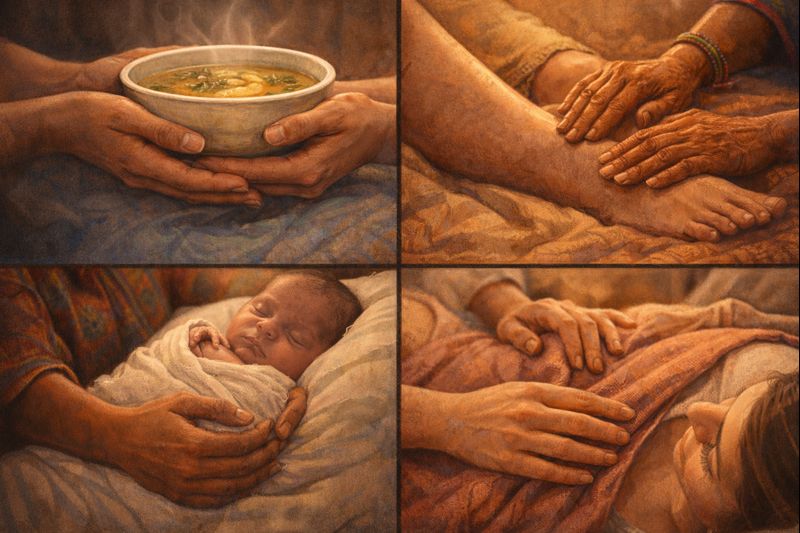
Despite differences in language, religion, geography, and history, many societies arrived at the same conclusion:
after childbirth, a woman needs time, warmth, rest, nourishment, and protection.
Not two weeks.
Not “as soon as you feel ready.”
But a clearly defined period — often around 40 days — when her only job is to recover and bond with her baby.
Modern life has largely erased these traditions, but their wisdom hasn’t disappeared. Let’s explore how different cultures understood the postpartum period — and what we can gently bring back into our lives today.
The Universal Pattern: A Sacred Window of Recovery
Across continents, traditional postpartum care follows a similar structure:
- a period of intentional rest
- warm, nourishing foods
- limited visitors and stimulation
- physical support for the belly and back
- collective care from family or community
This wasn’t about luxury. It was about long-term health.
In many cultures, people believed that ignoring postpartum recovery would show up later as fatigue, pain, emotional instability, or chronic illness. Postpartum wasn’t just about surviving birth — it was about how a woman would live for decades after.
Latin America: La Cuarentena
In many Latin American cultures, postpartum is known as La Cuarentena — literally, “the forty days.”
During this time:
- the mother stays mostly at home
- she avoids physical labor and heavy lifting
- warm foods and herbal teas are prioritized
- the belly is often wrapped with a cloth or binder
The idea is simple: childbirth leaves the body open and vulnerable. Rest and warmth allow everything to return to its place.
Many women still use:
- postpartum belly wraps or binders
- cotton shawls to keep the body warm
- herbal teas for digestion and lactation
Breaking la cuarentena is traditionally believed to affect health years later — not immediately, but quietly.
China: Zuo Yue Zi — “Sitting the Month”
In Chinese tradition, postpartum care is highly structured. Zuo Yue Zi means “sitting the month,” and it’s taken seriously.
For about 30–40 days, a new mother:
- stays indoors
- avoids cold air and cold water
- eats only warm, cooked foods
- rests extensively
Cold is believed to enter the body easily after birth, especially through the head, feet, and belly.
Meals often include long-cooked soups with warming ingredients like ginger. Many women today still rely on:
- insulated soup jars to keep food warm all day
- thermal socks and slippers
- heating pads for the abdomen or lower back
In modern China and Korea, this tradition has even evolved into postpartum care centers — showing that ancient wisdom can adapt to contemporary life.
India: Extended Postpartum Care
In many parts of India, postpartum care lasts 40 to 90 days, sometimes longer.
During this time:
- the mother rests while others handle household duties
- daily oil massage is common
- food is warm, soft, and spiced for digestion
- the mother is rarely left alone
This care is practical, not ceremonial. Oil massage, for example, is believed to support joints, nerves, and circulation — something modern postpartum bodies deeply need.
Many women recreate parts of this today with:
- sesame oil or herbal massage oils
- oil-warming bottles
- natural fiber towels reserved for massage days
The focus isn’t discipline — it’s replenishment.
Korea: Sanhujori
In Korea, postpartum recovery (Sanhujori) is still widely practiced.
Traditionally lasting around three weeks (sometimes longer), it centers on:
- warmth
- rest
- a very simple diet
A staple food is miyeokguk, a warm seaweed soup believed to restore minerals and blood.
Even today, Korean women often stay in postpartum care centers or recreate the experience at home with:
- cozy loungewear designed for recovery
- supportive pillows
- nutrient-dense soups and broths
The belief is that how well a woman recovers now affects her health for life.
African Traditions: Community Care
Across many African cultures, postpartum care is deeply communal.
After birth:
- elder women take over cooking and household tasks
- the mother rests with her baby
- massage, warm baths, and body care are common
- the mother is protected from stress and overexertion
Motherhood is not treated as a solo responsibility. The village steps in — practically and emotionally.
While modern life may not offer this structure, many women recreate it by:
- preparing postpartum meal kits
- using body wraps or shawls
- asking for intentional support instead of “help when needed”
Eastern Europe and Slavic Traditions
In Slavic cultures, the first 40 days after birth were considered a liminal time — the mother was “between worlds.”
During this period:
- she avoided heavy work
- stayed warm and rested
- focused on feeding and bonding
The idea wasn’t superstition; it was recognition of vulnerability.
Even today, many women find comfort in:
- natural fiber blankets
- warm herbal teas
- journals to process emotional changes
What These Cultures Agree On
Despite differences, the message is consistent:
Postpartum is not the time to push, perform, or prove strength.
It is a time to:
- slow down
- be supported
- nourish deeply
- protect energy
These traditions don’t demand perfection. They offer permission.
Bringing This Wisdom Into Modern Life
You don’t need to live in a village or follow strict rules to honor postpartum wisdom.
Small, realistic choices matter:
- keeping meals warm and simple
- using a belly wrap or heating pad
- resting without guilt
- choosing comfort over aesthetics
- limiting stimulation
Even one ritual — a warm soup, a body wrap, a quiet afternoon — sends the nervous system a powerful signal: you are safe to heal.
A Gentle Invitation
If you’ve been through postpartum already, you might ask yourself:
- What did I need more of?
- What felt supportive — and what didn’t?
- What would I do differently next time?
And if you’re preparing for postpartum:
- What traditions resonate with you?
- What support can you consciously create?
I’d love to hear your reflections.
This space is for shared wisdom, not rules.
With warmth and care,
Anastasia Holistic Sage🌿